
Reviewed · CITY WALLS TOURS
Walls of Dubrovnik: Small-Group 2-Hour Tour With a Local
Dubrovnik’s walls are one of those rare sights where the views and the story move together. I love the Old Town and Adriatic sea panoramas, and I love how guides like Marko turn military details into easy, memorable tales. The tradeoff is real stairs, more than 700, and the route is not for anyone who hates heights or struggles to walk.
You start near Ploče Gate, at the square in front of Fort Revelin, and you circle key sections of the fortifications toward Minčeta and back. It’s a small group (up to eight), in English, and it finishes where you meet the guide, so you can plan the rest of your day without stress.
Key things to know before you go
- Small-group size (max 8) keeps it personal and gives you time for questions.
- More than 700 stairs means sturdy shoes and a steady pace.
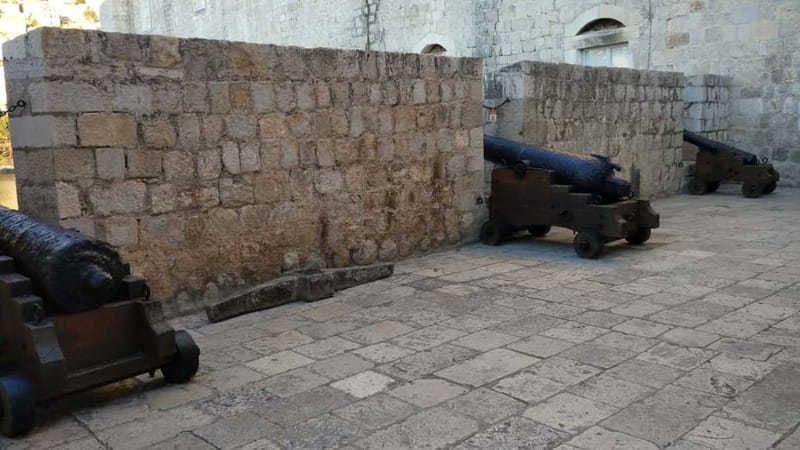
- Minčeta Fortress is a major highlight, with the guide explaining Michelozzi’s role and old artillery features.
- A photo chance of Stradun comes from the walls, not the usual street-level spots.
- Forts Lovrijenac and Bokar explain how the Pile Gate was protected, including a wall section said to be 12 meters thick.
- Ottoman and Venice pressure is woven into the defense story, with diplomacy showing up as a key theme.
Why Dubrovnik’s Walls Feel Worth It in Only 2 Hours
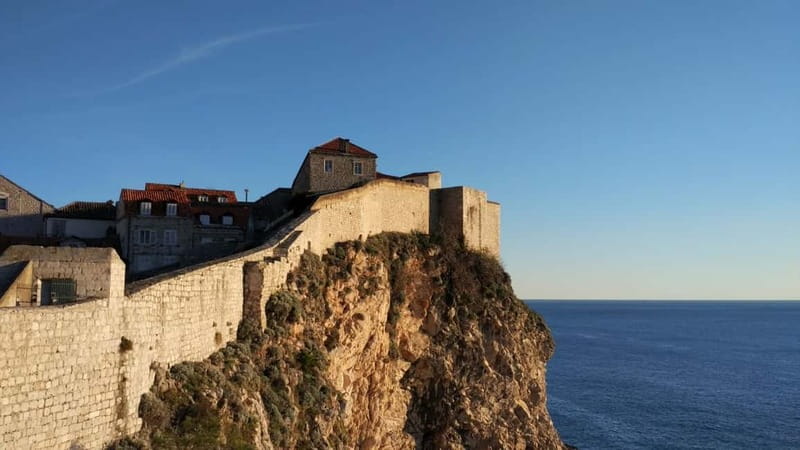
This tour works because Dubrovnik’s walls are not just a lookout loop. Every stretch answers a simple question, what did they need to protect, and how did the city do it? In two hours, you get the rhythm of the defense system without turning it into a half-day march.
The biggest payoff is that the “when” and “why” land right where you’re standing. You’re not reading plaques from a distance. You’re up high looking down at the harbor, then walking along the line where weapons and tactics mattered.
Also, Dubrovnik’s walls are crowded when you do them on your own. With a local guide, you get order and context fast, so you can actually enjoy the views while understanding what you’re seeing.
The one thing to respect is the physical side. More than 700 stairs is a lot, and there’s no elevator. If you’re on the fence, you’ll enjoy the story more if you’re able to keep a moderate pace without stopping every few minutes.
More ways to walk the city walls:
- Dubrovnik: City Walls Early Morning or Sunset Walking Tour
★ 4.8 · 1,523 reviews - Dubrovnik: Ancient City Walls & Wars Walking Tour
★ 5.0 · 1,270 reviews - Dubrovnik Combo: Old Town & Ancient City Walls
★ 5.0 · 1,019 reviews
Fort Revelin Meeting Point: Start Where the Defense Begins
Your guide meets you at the corner of the square by a cannon, holding a red and white flag. The start point is in the Fort Revelin area near Ploče Gate, so you’re already placed at the eastern approach to the Old Town.
I like this setup because it avoids the common city problem, you spend your first time getting oriented instead of learning. Here, you begin with a location that matters to the walls’ purpose, and the guide can build the story logically from the first climb.
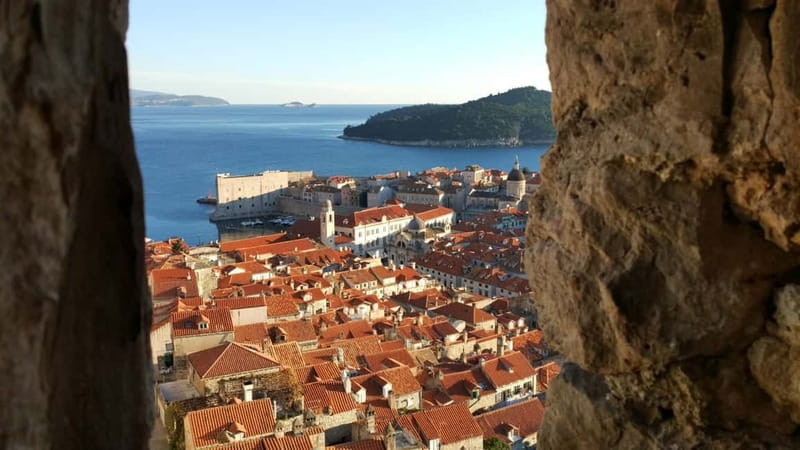
After a few short walking segments with explanation, you start ascending onto the wall route. The climb gets your attention immediately, because the Old Harbor views come fast and you can see how the Republic’s maritime life depended on that coastline.
If you’re arriving late or running between sights, give yourself buffer time. Once you start up, you’ll be moving for long stretches, and the stairs are part of the experience, not a quick detour.
Ascending the Walls: Old Harbor Views and the Republic’s Maritime Priorities
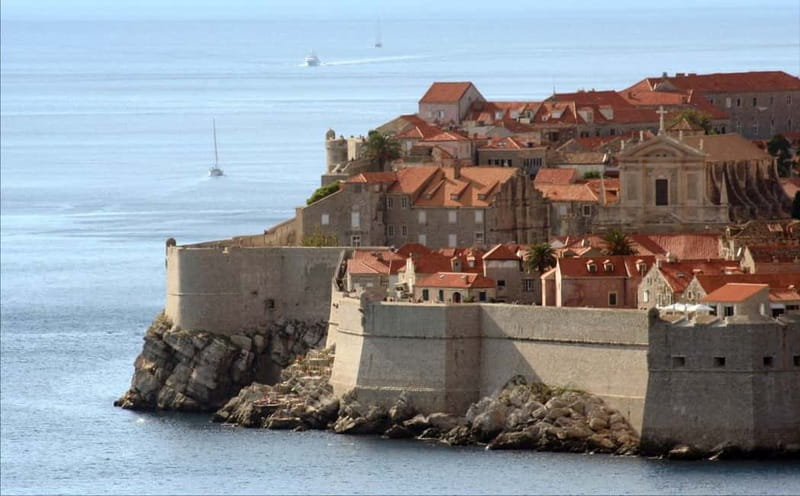
Right away, you’re treated to panoramic views of the Old Harbor. That matters, because Dubrovnik’s defense wasn’t only about land raids. The story is also about ships, trade, and control of the sea lanes.
Your guide explains the harbor’s role in the Dubrovnik Republic’s maritime activities. You also hear why protection against enemy incursions was essential. Standing on the walls while looking at the harbor makes that point feel obvious, even if you are not a history person.
From there, the tour moves along the northern stretches of the walls. You learn about medieval warfare in a very practical way, including how archery, stone-throwing tactics, and siege methods worked in the real world. The guide connects those tactics to the wall positions you’re walking past, which helps you visualize what defenders could do and what attackers would face.
One nice detail is how the guide keeps answering the implied question, who had the advantage here? When you’re up on the fortifications with the sea in view, it’s easier to understand why this city-state invested so heavily in stone and strategy.
Fort Revelin to Northern Walls: Medieval Tactics in Plain Sight
Fort Revelin is a key stop early on, because it guarded the eastern approach to the Old Town for centuries. In tours that focus only on the scenery, you might miss that the walls are a system, not a single monument.
Here, Fort Revelin helps you understand the “layers” idea. Your guide points out how different sections contributed to defense, and you move along the walls’ northern stretch with explanations that stay tied to what you can see.
You’ll also hear stories linked to the engineering and logic of the walls. Expect explanations around the practical realities of medieval attacks, things like ranged defense and the use of heavy projectiles during siege scenarios.
This is where small-group size really helps. Up on the walls, it’s easy to lose people in the crowd if you’re not guided. With up to eight participants, your pace stays manageable, and the guide can catch questions without turning the whole walk into a stop-and-go mess.
A different way to spend a day in Dubrovnik:
- Blue Cave Small-Group Boat Tour from Dubrovnik
★ 5.0 · 9,360 reviews - Full-Day Dubrovnik Elaphite Islands Cruise with Lunch and Drinks
★ 5.0 · 8,823 reviews - Dubrovnik: Epic Game of Thrones Tour + Lokrum & Saver Option
★ 4.9 · 5,995 reviews - Dubrovnik: Elaphiti Islands Full-Day Cruise with Lunch
★ 5.0 · 5,938 reviews
Minčeta Fortress: Michelozzi, Cannons, and the Best Wall-Top Break
The tour’s crown moment is Minčeta Fortress. You get a special “look down” perspective, plus time for a classic photo view of Dubrovnik from the walls. The route is worth it here because the city opens up around you, and the sea feels close.
Your guide talks about contributions from the Italian architect Michelozzi, and connects those design choices to how the fortress functioned. You’ll also hear about an old gun foundry and the cannons that once defended the walls.
I like how this part turns the story from general warfare into specific hardware and design decisions. You’re not just told that cannons existed. You’re told where they fit into the broader defense plan, while you stand at the vantage points they were built for.
And yes, it’s also the best moment to take a breath. You’ll feel the difference between exhausting stair-walking and actually enjoying a viewpoint with context.
From Minčeta and the surrounding top segments, you also get a photo opportunity that frames Stradun, Dubrovnik’s main street, from a unique wall-side angle. It’s the kind of shot you can’t easily recreate from street level.
Western Walls, Pile Gate Protection, and the Lovrijenac 12 Meter Fact
As the tour continues along the western stretch, you shift from open harbor views to the fortifications connected to Pile Gate protection. This is where Forts Lovrijenac and Bokar enter the story.
Your guide explains their strategic role in defending the main entry side. The most memorable detail here is the surprising wall thickness mentioned for Lovrijenac, some sections said to reach 12 meters. That single fact makes the whole defense strategy feel concrete. Stone thickness like that is not symbolic. It’s built for surviving force.
This section also gives you a better sense of how Dubrovnik’s walls were designed to control movement. You begin to understand how attackers would approach, where defenders could respond, and why specific towers and forts mattered more than others.
If you like military logic, this is your favorite stretch. If you are here mainly for photos, you still benefit, because the guide points out angles and positioning that make the views more meaningful.
Just keep an eye on your pace. Western stretches can feel long when your legs are already loaded from earlier stairs.
Southern Sections: Oldest and Youngest Walls, Venice Ties, and Diplomatic Pressure
The southern walk covers both older and newer wall sections. That contrast gives you a sense of how Dubrovnik kept adapting as threats and politics changed over time.
You’ll hear about the city’s historical ties with Venice and the rivalry between these maritime powers. That part matters because it shows the walls weren’t only about war against a single enemy. They were built within a shifting political map where trade, alliances, and pressure all mattered.
The guide also brings in Dubrovnik’s relationship with the Ottoman Empire. At a strategic tower, you learn how diplomacy often triumphed over armed conflict. I find this detail refreshing because it prevents the story from becoming a simple list of sieges. It’s a reminder that a small state survived by thinking as hard as it fought.
Some of your best moments here are when you look down and realize how the walls ring the entire city. From the south, you can feel the “whole-city protection” idea in a way that a single street or single viewpoint can’t capture.
If you want the tour to feel less like walking and more like understanding, ask your guide to repeat the point about diplomacy and how it changed decisions. That theme becomes easier to grasp as you move from one segment to the next.
Stairs, Fitness, and Height Anxiety: The Real Practical Considerations
Let’s be blunt in a helpful way. There are more than 700 stairs on this tour, and there is no elevator or escalator. That means you need solid stamina and balance, even if you normally consider yourself fit.
The tour is not recommended for people with walking difficulties. It’s also not suitable for people with mobility impairments, wheelchair users, children under 12, or anyone afraid of heights. If any of these apply to you, don’t gamble with your day. The wall route is part sightseeing and part vertical challenge.
What I recommend for anyone who does qualify physically: wear supportive shoes with grip. Go slowly at first so you don’t burn out early. If you’re prone to getting winded, take a breath before each stair cluster instead of after you are already struggling.
Also consider weather. The top sections can feel more exposed. If it’s hot, take your cues from your body and pace yourself. The guide can usually help you keep moving at a comfortable rate.
Price and Value: $36 Plus the Wall Ticket You Need to Plan
The tour price is $36 per person for a 2-hour small-group guided walk. That is decent value for what you get, because you’re paying for a licensed English-speaking local guide and a structured route with context.
One key detail: the entrance ticket for the city walls is not included. If you have a Dubrovnik Pass, you can enter for free and skip the line, which can be a real time-saver when the entry queues build up.
If you do not have the Dubrovnik Pass, the single ticket price is 40 Euros, available at the entrance by cash or card. In January, February, November, and December, tickets are 20 Euros. Students with a valid ISIC card and under-18s pay 15 Euros.
So what does that mean for value? If you add the ticket, the real cost becomes the tour plus the wall entry. Even so, the guide experience can make the day feel more connected, especially if you care about why certain forts mattered.
If you are on a tight budget and you only want views, you might feel like you could do it independently. But if you want the defense story explained in a logical route, a small-group guide is where your money turns into understanding.
Who This Tour Is Best For
This experience is ideal if you want military and maritime context tied directly to where you’re standing. It’s also a good fit if you enjoy storytelling and clear explanations, not just monument photos.
It suits people who like a moderate workout and can handle stairs for a sustained period. You’ll also appreciate the small group, especially if you enjoy asking questions and getting answers in real time.
One detail I found particularly encouraging is the way some guides, including locals like Marko, keep people engaged with witty delivery and even light quizzing. That style is great for mixed ages, as long as everyone meets the tour’s height and stair requirements.
If you dislike heights, have low stamina, or need step-free routes, skip this one. Choose a different way to experience Dubrovnik that matches your mobility and comfort level.
Should You Book the Walls of Dubrovnik Small-Group Tour With a Local?
Yes, I’d book it if you want the walls to make sense, not just look impressive. The small-group limit of eight, the English licensed guide, and the focus on key fortifications like Fort Revelin and Minčeta make the 2-hour format feel efficient.
Book it with extra confidence if you also plan to get a Dubrovnik Pass. Knowing the wall ticket is not included, and that you can avoid paying twice if you already have the pass, helps you keep your budget under control.
Skip it if stairs and heights are a problem for you. More than 700 stairs and the lack of elevators is not a minor detail, it’s the main constraint.
If you’re physically able and you’re curious about how a small Adriatic power defended itself through tactics and diplomacy, this is a strong, practical choice for your Dubrovnik day.
FAQ
Is the city walls entrance ticket included in the tour price?
No. The tour price does not include the entrance ticket for the city walls. If you have a Dubrovnik Pass, you can enter for free and skip the line. If you do not have the pass, the single ticket price is 40 Euros, and it can be 20 Euros in January, February, November, and December. Students with a valid ISIC card and under-18s pay 15 Euros.
Where do I meet the guide?
Meet your guide in the corner of the square by the cannon, holding a red and white flag.
How long is the tour?
The tour lasts 2 hours.
How many people are in the group?
It is a small-group tour limited to up to eight guests per guide.
Is the tour wheelchair accessible?
No. It is not suitable for wheelchair users or people with mobility impairments. There is also no elevator or escalator.
Is it suitable for children?
It is not suitable for children under 12.
What language is the tour?
The tour is led in English by a professional licensed English-speaking guide.
Newly reviewed in Dubrovnik
- Private Walking Tour through the Old Town of Dubrovnik★ 5.0 · 3 reviews
- Dubrovnik Old City Walls Private Tour★ 5.0 · 12 reviews
- Dubrovnik Private Photoshoot with Local Professional Photographer★ 5.0 · 15 reviews
- Dubrovnik Van Tour for Panoramic Views★ 5.0 · 25 reviews
- Ston Tour: City Walls, Saltworks, Wine & Adriatic Seafood★ 5.0 · 3 reviews
- Private Full Day Peljesac Wine Tasting Tour from Dubrovnik★ 5.0 · 35 reviews
- TOP OFFER: Dubrovnik to Split via Ston, Počitelj, Mostar, Kravica★ 5.0 · 15 reviews
- Pelješac Wine, Beach and Lunch – Relaxing Tour from Dubrovnik★ 5.0 · 15 reviews
City Walls Tours, compared.
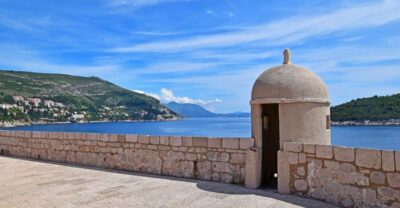
City Walls Early Morning or Sunset Walking Tour
Read our review →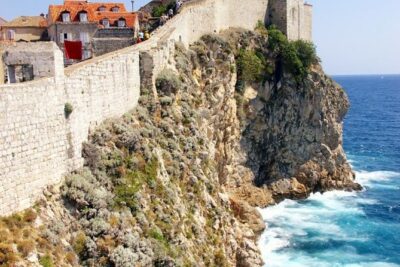
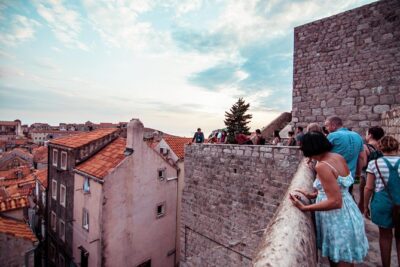
Dubrovnik Combo: Old Town & Ancient City Walls
Read our review →
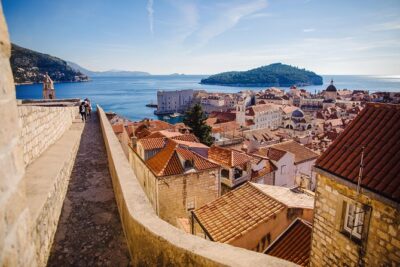
Dubrovnik Cable Car Ride, Old Town Walking Tour plus City Walls
Read our review →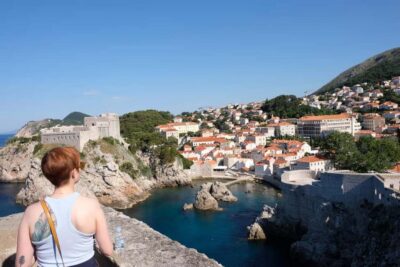
City Walls Tour for Early Birds & Sunset Chaser
Read our review →
Dubrovnik City Walls Tour for Early Birds or Sunset Chasers
Read our review →
Browse the lists this tour appears in