
Reviewed · CITY TOURS
Dubrovnik Old City Private Tour
What makes this Dubrovnik Old City private tour so interesting is that it turns the big postcard sights into a guided walk with context, from the first gate you pass to the last square you stand in. I especially like the private-group pace and the way the guide connects major stops like Pile Gate and Stradun to what life felt like through the centuries. The one real drawback to plan around is that Dubrovnik Old Town means lots of steps and uphill streets, so comfy shoes matter.
In plain terms, you are paying for a guide who can keep the walk moving, answer questions, and point out details most people miss when they wander on their own. This tour is in English and runs about 2 hours 30 minutes, starting at Nautika and ending at Luza Square. You might even hear stories in the style of guides who have been named during past experiences, like Vlaho, Antun, Tea, and Paula, who are repeatedly praised for clear explanations and a friendly way of handling questions.
One more thing I appreciate: museum time is handled smartly. The tour generally includes two museum entrance fees, but those can be swapped depending on timing or season, and refunds apply if a museum is closed.
Key highlights that make this tour worth your time
- A true private experience for just your group, so you can ask questions without fighting the crowd
- Old Town walls plus the main spine of Stradun, with stops timed to the flow of the historic center
- Franciscan Church and Monastery museum access, including the old pharmacy museum area
- Cathedral and government landmarks, like the Cathedral Treasury and Rector’s Palace
- Fortifications and maritime defense sights, including City Harbor and key gates
- A guided history arc, running from ancient times through the 1990s conflict
Why a private Old Town walk is the smart move in Dubrovnik
Dubrovnik Old Town is beautiful, but it can also be a blur if you are just trying to see everything. This private format solves the biggest problem, you get someone to translate the place while you are standing in it.
I like that the guide keeps the focus on what you are actually looking at: walls, palaces, churches, squares, and the fortifications that made this city hard to attack. When the guide ties those sights to everyday life and political change, you start noticing how the streets, buildings, and defenses all connect.
And yes, the tour still walks you through the famous stuff. But the value is that it turns famous into understandable. You will finish feeling like you can name key places, not just point at them.
A few more ways to see Dubrovnik
- Mostar and Kravice Waterfalls Tour from Dubrovnik (Semi-Private)
★ 5.0 · 3,125 reviews - Dubrovnik: Blue & Green Caves Private Boat Tour with Drinks
★ 4.7 · 814 reviews - Dubrovnik Private Speedboat Tour to Elaphite Islands with Drinks
★ 5.0 · 660 reviews
Meeting at Nautika and ending at Luza, with a route that adjusts
The tour starts at Nautika (Brsalje ul. 3, 20000 Dubrovnik) and ends at Luža Square, near the Church of St. Blaise at the east end of the Placa, also known as Stradun. That end point matters. Luza is a natural place to regroup, grab a snack, or plan your next move in the city center.
You should know the walking route can shift based on weather, crowds, events, or other local issues that affect comfort and quality. That is not a problem most days. It is a sign the guide is trying to keep the experience smooth instead of marching you into bottlenecks.
Also, the tour is offered in English. Past guides named in experiences, such as Vlaho and Antun, are described as very easy to follow in English, with clear explanations and a steady pace.
Nautika, Kolorina Bay, and the viewpoints that set the tone
You begin with a quick introduction, then step into the viewpoints that frame Dubrovnik’s defensive mindset.
At the Nautika meeting point, the guide typically sets expectations right away. This is where you get context for what you are about to see, including why the city developed the way it did and how the fortifications shaped daily life.
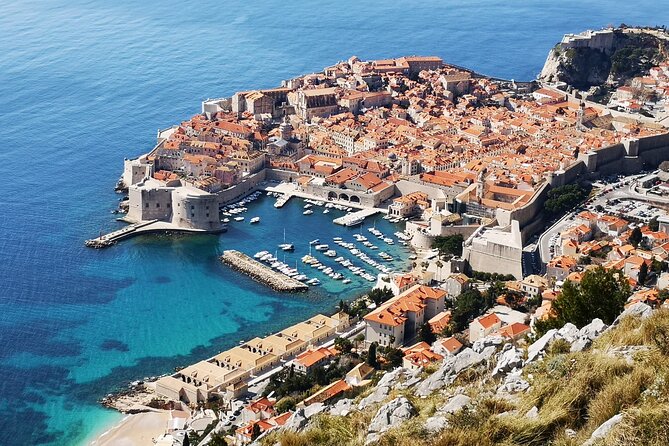
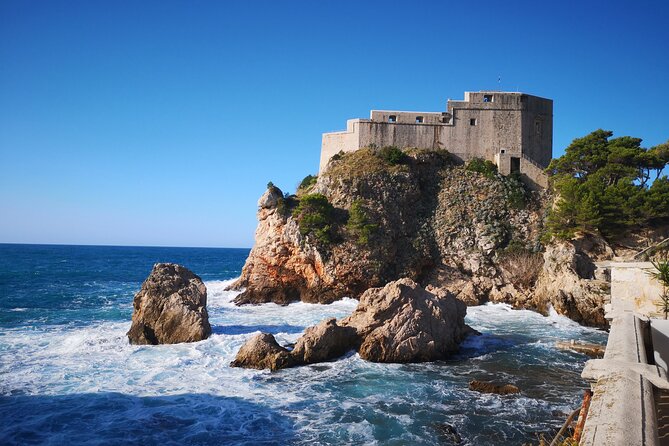
Next comes Kolorina Bay and the area around U Pilama and St. Lawrence Fortress. This stop is useful because it helps you “read” the city from the outside edges, not just the interior streets. You start understanding how the coastline, fortifications, and gates connect into one system.
Then you move to the Pile Gate area, passing West Gate Pile and seeing the old city walls up close, including the Tower of Minčeta. If you want a quick win, this is it. Standing here, you can picture the city as a walled stronghold, not just a photogenic street maze.
Practical note: wear shoes you can trust. This part of the walk includes uneven stone and slopes.
Franciscan Church and Monastery museum, plus the old pharmacy
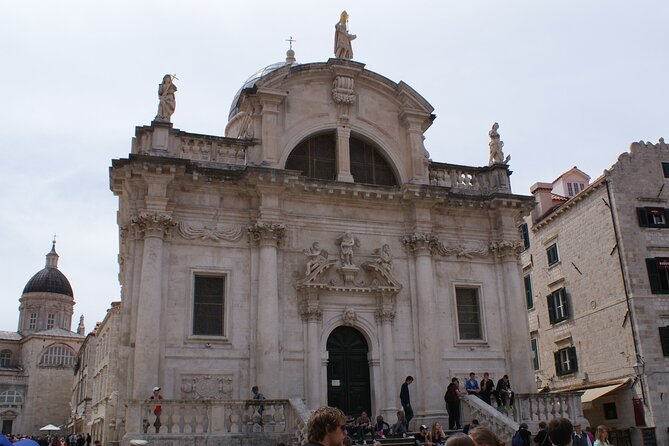
The most “inside the past” stop is the Franciscan Church and Monastery. This is where you trade street views for quieter museum time, and the guide uses that shift to explain Dubrovnik’s longer timeline.
You can expect both the museum visit and the story behind it. The museum experience highlights include an old pharmacy collection, which is a surprisingly memorable topic because it shows how health, knowledge, and daily routines worked over time.
One consideration: museum entrances are not always the same across dates and seasons. The tour generally includes museum access for the Franciscan or Dominican museum, but it can be substituted based on timing. If a museum is closed, funds are refunded.
If you like history that feels tangible, not just dates on a timeline, this stop is often where the tour clicks. It gives you a break from walking while still building understanding.
A different way to spend a day in Dubrovnik:
- Blue Cave Small-Group Boat Tour from Dubrovnik
★ 5.0 · 9,360 reviews - Full-Day Dubrovnik Elaphite Islands Cruise with Lunch and Drinks
★ 5.0 · 8,823 reviews - Dubrovnik: Epic Game of Thrones Tour + Lokrum & Saver Option
★ 4.9 · 5,995 reviews - Dubrovnik: Elaphiti Islands Full-Day Cruise with Lunch
★ 5.0 · 5,938 reviews
Stradun: Onofrio’s Fountain and the main street rhythm
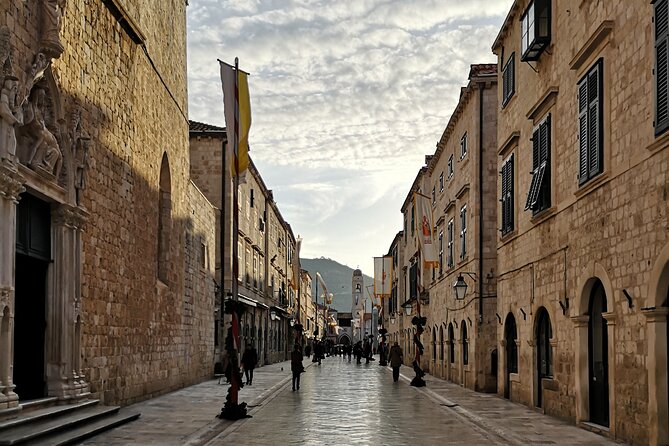
After the monastery, you hit Stradun, Dubrovnik’s main city street. This is the part of Old Town that most people come to see first, but the guide helps you see it differently.
On Stradun, you will spot Onofrio’s Fountain and the Church of the Holy Saviour. The guide’s job here is not to repeat what you can read on a sign. It is to point out why this street matters as the city’s central spine and how the architecture and public spaces supported city life.
This stop is also where you learn how to navigate the crowds. Even on busy days, a private guide can steer you toward better sight lines and calmer angles.
If you get motion-sick or you hate crowds, tell the guide early. You can often adjust the pace while still covering the essentials.
Hidden lanes to St. Ignatius and the square of Ivan Gundulić
Next comes a more atmospheric section of the Old Town. You slip into hidden streets rather than staying only on the main corridor.
You will visit the Church of St. Ignatius of Loyola, then move through areas like the Great Granary and the Jesuit Church and its stairway. These details matter because Dubrovnik is not only walls and facades. It is also a city of small transitions, stairways, and tucked-away corners that create real depth.
The walk also includes the Square of Ivan Gundulić. This is a nice pause point, and the guide often ties it back to civic identity and the cultural life that grew inside the Republic of Dubrovnik.
This portion is a good match for anyone who prefers texture over checklist tourism. If you enjoy noticing street-level details, you will leave with more than photos.
Cathedral of the Assumption and Rector’s Palace, power in stone
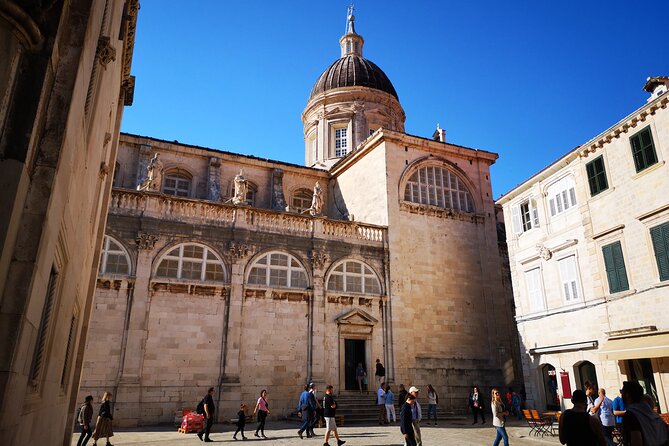
Then you step into two big “why this city functioned” stops: the Cathedral of the Assumption of the Virgin Mary and Rector’s Palace.
The cathedral area includes the Cathedral Treasury of the Republic. This is one of the museum add-ons that may or may not be the exact package depending on what is available that day. If it is included, you get the chance to see how the city presented itself in religious and political life.
After that you reach Rector’s Palace, the seat of the government of the Republic of Dubrovnik. This stop is valuable because it shifts the story from buildings as scenery to buildings as institutions. You start understanding how leadership, law, and the Republic’s role shaped what you see in front of you.
If you love civic history, this is a strong pairing. The guide’s explanations usually connect the power center to the defensive system you saw earlier, since a city in crisis needs both strong walls and strong governance.
City Harbor fortifications, Lazareti quarantine, and the east gate area
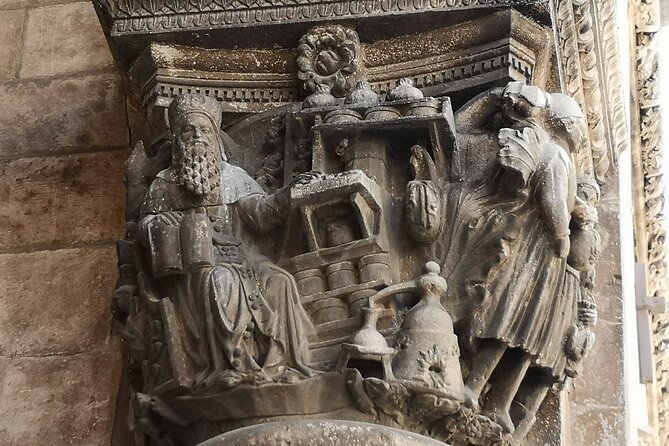
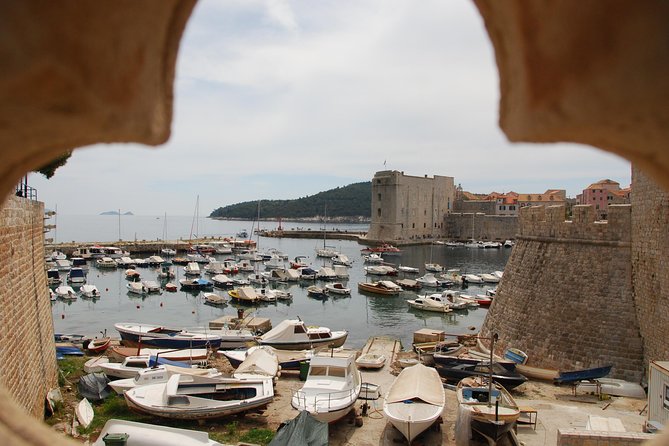
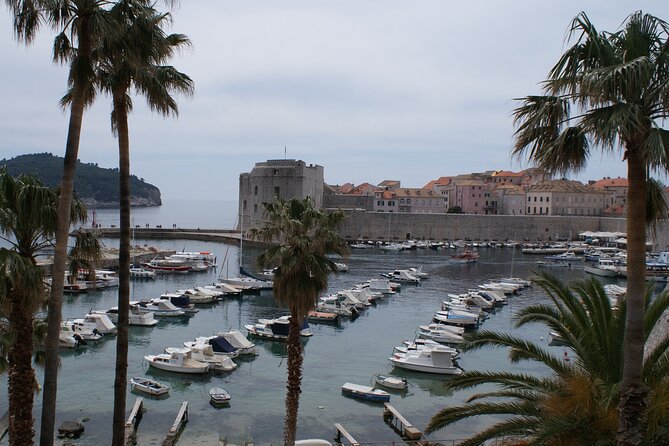
The tour continues toward the City Harbor and the defensive and maritime landmarks that define Dubrovnik’s relationship with sea trade and threats.
You will see Fortress of St. John, plus Lazareti Quarantine, which gives the tour a more human and practical side. Quarantine may sound like a modern word, but historically it was essential for controlling disease when ships arrived. That makes the past feel surprisingly relevant.
You also pass fortifications of St. Luke, Revelin Fortress, and the East Gate Ploče, plus the Dominican Monastery area. This sequence is where you get a clearer view of the layers of defense and how the city controlled movement.
One reason I like this part of the walk for first-timers is that it widens your understanding. You are not stuck only inside the center. You start reading the whole city as a protective system built around the harbor.
Luza Square finale: Sponza Palace, clock tower, and St. Blaise
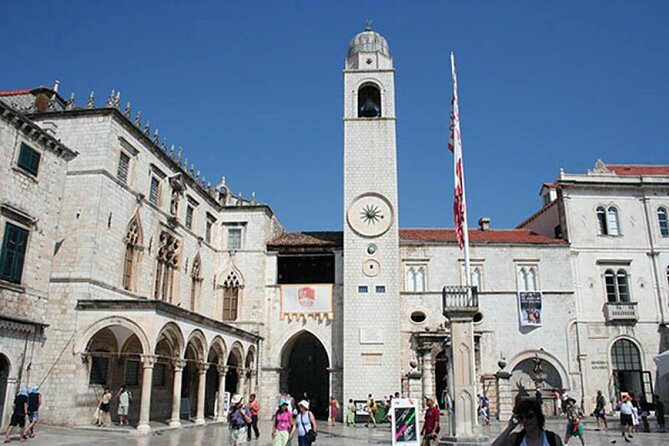
The tour ends in Luza Square, the kind of place where it is easy to keep exploring after the guide leaves. You will see landmarks tied to the city’s public life, including Sponza Palace and the Clock Tower, plus smaller visual markers like the Small Onofrio’s Fountain.
The walk also passes the City Hall and the Church of St. Blaise, which helps you finish with the feeling of civic identity. By the time you reach this point, you have already seen the gate, the main street, religious institutions, government power, and harbor defenses. The end location makes that whole story feel complete.
If you want an extra advantage, use the wrap-up time to ask where to go next based on your interests: museums, viewpoints, or quieter corners. A good private guide can help you plan without steering you into tourist traps.
Price and value: what $133.03 buys you here
At $133.03 per person for about 2 hours 30 minutes, this tour is not the cheapest option. But you are paying for the reasons Dubrovnik is expensive: a private guide, a route focused on the highest-impact historic sites, and museum access that is sometimes included.
Here is what you actually get for the money:
- Professional tour guidance for the full walk
- Two museum entrance fees in general, often covering the Franciscan or Dominican museum and the Cathedral Treasury
- A format where your group is the only group participating, which usually means better listening and more chances to ask questions
It is also good value if you are traveling with family or a small group that wants flexibility. Some reviews mention smooth logistics and guides who adjusted pace, including accommodation for older visitors and for teens who might otherwise get impatient. If that sounds like you, private often pays off quickly.
The only cost risk is the museum swap. If a specific museum is substituted for timing or season, you still do not lose value because museums closures lead to refunds. Just be sure you are ready for an experience shaped by the day you are there.
What to expect from the guide, beyond names on a sign
This tour stands or falls on the guide. Based on the strongest themes in prior experiences, the best versions of this tour share a few traits.
First, guides tend to be very clear in English and friendly to questions. People also repeatedly mention a balanced pace, enough time in each spot to understand what you are looking at, not so much time that you feel trapped in a single viewpoint.
Second, the walk often includes practical comfort. You will appreciate this on hot days. Some experiences note keeping groups in shade and away from heavier crowds when possible.
Third, guides often connect sites to wider cultural references. Game of Thrones comes up in conversation for several guides, including named guides like Vlaho and Antun, and they point out spots where that pop-culture connection fits naturally.
If you care about any of those, it is worth asking at the start. A good guide will adjust their storytelling to match your style.
Who this tour fits best
This tour is a great match if you:
- Want a first serious pass through Old Town that helps you orient fast
- Prefer history explained while you are standing at the real locations
- Travel with a group that benefits from a private pace, like families or mixed-age travelers
- Like structure, so you do not waste time guessing what matters
It is also a solid option if you want museum time without turning your day into a checklist. The route includes key sights and still gives you at least one indoor stop.
If you have mobility limits, you should plan carefully. Even with a guide who can pace you, Old Town has slopes, stairs, and stone steps. The tour is described as possible for most travelers, but you should still bring realistic expectations.
Small tips to get more out of every stop
Bring water and a hat. Old Town sun can be relentless, and shade is not evenly distributed.
Start your questions early. Ask how they want to handle pace, what to skip if you are tired, and which stops are the most important if your group only cares about a few things.
If you want museum time, ask the guide to confirm what will be covered that day, since museum entrances can be substituted depending on timing. This is usually handled smoothly, but it is still smart to know what to expect.
Finally, keep your camera ready, but give yourself a moment to look slowly. The guide’s best work happens when you stop rushing and actually compare what the buildings look like now to what they were built to do back then.
Should you book this Dubrovnik Old City Private Tour?
If you want a high-value introduction to Dubrovnik that turns the highlights into something you understand, I think this is a strong buy. The private format helps a lot in a place where crowds can drown out good explanations, and the mix of walls, main streets, religious sites, and harbor fortifications gives you a fuller sense of how Dubrovnik worked.
Book it if you like guided storytelling, want museum access included in principle, and you are comfortable with steady walking. Skip it only if you know you cannot handle steps and hills, or if you would rather explore completely on your own with no structured route.
If you do book, aim to wear supportive shoes and show up ready to listen. This tour pays you back the moment you look at Pile Gate and understand why Dubrovnik needed those walls in the first place.
Newly reviewed in Dubrovnik
- Private Walking Tour through the Old Town of Dubrovnik★ 5.0 · 3 reviews
- Dubrovnik Old City Walls Private Tour★ 5.0 · 12 reviews
- Dubrovnik Private Photoshoot with Local Professional Photographer★ 5.0 · 15 reviews
- Dubrovnik Van Tour for Panoramic Views★ 5.0 · 25 reviews
- Private Full Day Peljesac Wine Tasting Tour from Dubrovnik★ 5.0 · 35 reviews
- TOP OFFER: Dubrovnik to Split via Ston, Počitelj, Mostar, Kravica★ 5.0 · 15 reviews
- Ston Tour: City Walls, Saltworks, Wine & Adriatic Seafood★ 5.0 · 3 reviews
- Pelješac Wine, Beach and Lunch – Relaxing Tour from Dubrovnik★ 5.0 · 15 reviews
City Tours, compared.
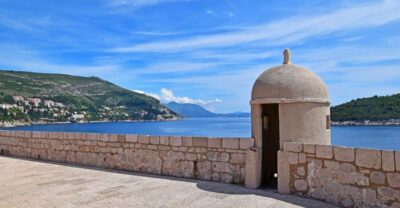
City Walls Early Morning or Sunset Walking Tour
Read our review →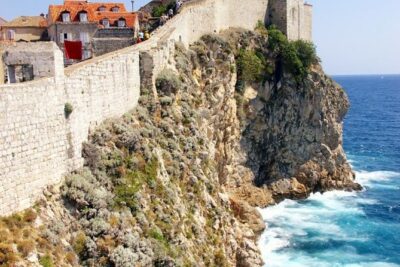
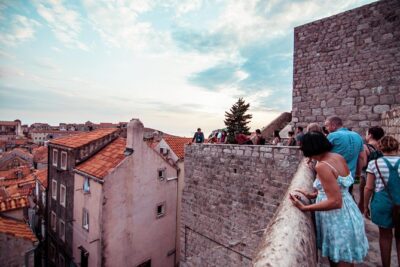
Dubrovnik Combo: Old Town & Ancient City Walls
Read our review →
Dubrovnik Cable Car Ride, Old Town Walking Tour plus City Walls
Read our review →
City Walls Tour for Early Birds & Sunset Chaser
Read our review →
Game of Thrones & the Old City Grand Tour in Dubrovnik
Read our review →
Dubrovnik City Tour: Panorama Drive & Sightseeing Walk
Read our review →Browse the lists this tour appears in