Reviewed · PRIVATE
Dubrovnik to Athens; Semi – Private tour with Tour Leader & Car
This tour is interesting because it strings together seven countries into one continuous Balkan story. You get medieval bridges, war-scarred streets, Ottoman houses, UNESCO towns, mosque interiors, monasteries on cliffs, plus long coastal and mountain drives that make the geography feel real.
I especially like the day-to-day mix of major sights plus smaller, specific stops. Places like Bišćevića Kuća in Mostar, St. Luke’s church in Kotor, the paper workshop in Ohrid, and Onufri’s museum in Berat give you context, not just photo stops.
One consideration: the route is fast and packed, so you will spend a good chunk of each day in the car. If you hate long drives or you want hours inside every big-ticket site, you might find the pacing a bit intense.
Key takeaways before you commit
- Max 10 travelers keeps this feeling more personal than a giant coach tour
- Private transportation means fewer “everyone line up” moments and easier border-to-border movement
- Spotlight stops like Bišćevića Kuća, the paper museum in Ohrid, and St Naum add texture beyond the usual highlights
- English tour leader plus hotel pickup in Dubrovnik Town (with car-access limits) makes the start smoother
- Most meals are on your own, so your budget for lunches and dinners matters
Starting in Dubrovnik Town: pickup at 7:30 and a smart border handoff
You start early, 7:30 am, in Dubrovnik. The meeting point is Platska ul. 7, 20000 Dubrovnik, and you are picked up from the nearest point to your hotel within Dubrovnik Town. One small logistics detail matters here: cars may not enter some parts of Dubrovnik Town, so you should plan to walk a bit after the pickup.
The real value of that morning handoff is that you are not trying to figure out the border shuffle yourself. Your driver shuttles you to where the tour leader meets the group, and then you slide into guided touring with less waiting and fewer language headaches.
This is a semi-private style tour with a maximum of 10 travelers, and that smaller size shows up later in how the days feel. You get the benefit of a guide when you want it, without the chaos of massive crowds.
A few more ways to see Dubrovnik
- Mostar and Kravice Waterfalls Tour from Dubrovnik (Semi-Private)
★ 5.0 · 3,125 reviews - Dubrovnik: Blue & Green Caves Private Boat Tour with Drinks
★ 4.7 · 814 reviews - Dubrovnik Private Speedboat Tour to Elaphite Islands with Drinks
★ 5.0 · 660 reviews
Days 1 to 2: Mostar and Sarajevo, Ottoman detail and the WWI origin story
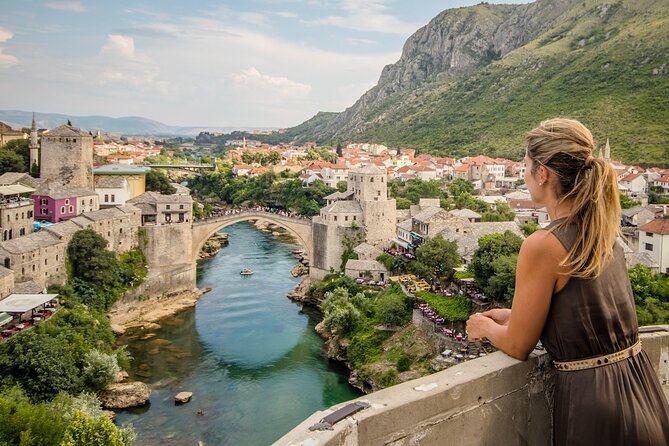
Day 1 is basically a culture shock in the best way. After your Dubrovnik pickup, you cross into Bosnia and Herzegovina and head to Mostar. The icon is Mostar Old Bridge, Stari Most, built in the 16th century with a classic Islamic architectural look. What I like is that you do not just stand in one place. You walk the Old Bazaar with its colorful streets and lively atmosphere.
Mostar also has a commemorative layer that makes it more than scenery. You will notice “Don’t Forget” stones around town, tied to the city’s modern history. Then you get Ottoman-era residential architecture at Bišćevića Kuća, a preserved 17th-century riverside house. It is a quick stop, about 30 minutes, but it adds the feeling of what daily life looked like, not just what famous buildings look like.
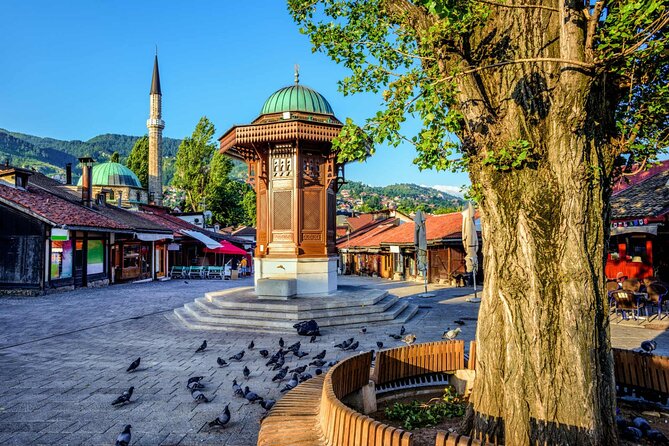
Day 2 is Sarajevo, and it is a different kind of tour. You drive there from Mostar, then do a walking day that includes uneven terrain and visits to visible reminders of conflict, including bullet holes and cannon marks around town. It is heavy material, but the tour frames it in how Sarajevo developed from medieval Bosnian Kingdom roots through Ottoman and Austria-Hungarian periods.
You will see both Ottoman and Austria-Hungarian parts of the city, with markets, bazaars, mosques, churches, and synagogues. That combination is what makes the city feel like a real European crossroads.
The Latin Bridge stop adds one sharp historical hook. The bridge is tied to the WWI trigger story, and you learn why it was called Latinluk, linked to the Catholic quarter. Then there is a very practical, very Balkans break at Caffe Divan for the famous Turkish coffee or tea included with the tour. It gives you a reset before more walking and driving.
Day 3: Blagaj spring water and Kotor’s old town puzzle
Day 3 starts with Blagaj, just outside Mostar. The setting is the kind of place that makes you understand why people kept building on water. Blagaj sits near a cliff with the blue waters of the Buna spring in front of it. You get an Ottoman medieval town feel and a natural backdrop that is worth slowing down for.
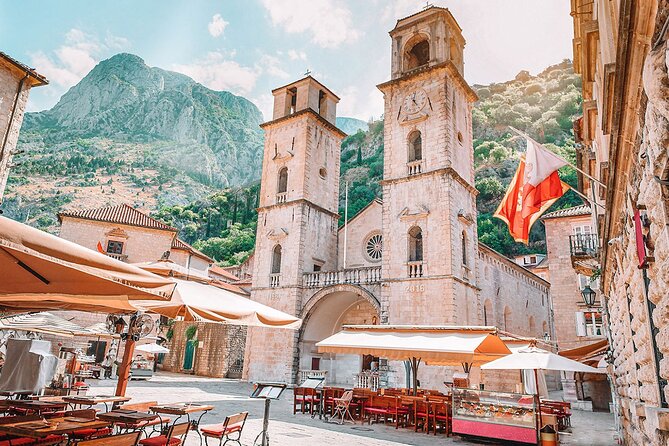
Then you head to Montenegro and Kotor, a UNESCO world heritage site. Kotor’s old town is a maze of narrow cobblestone streets. The tour explains why it looks chaotic: the street plan was designed to confuse intruders. Modern visitors experience it as charm, but you are given the “why” behind the design.
The tour also includes a key spiritual and architectural stop: Saint Luke’s church. Locals connect it to unity, which gives you a reason to pay attention beyond the building itself. You get time to explore on your own in the afternoon, so you can choose whether you want more photo time or just wander without stopping at every corner.
If you prefer a day with fewer moving pieces, this is one of the calmer-feeling days, because you still have free time in Kotor after the guided portion.
Days 4 to 5: Budva, Shkoder, and the Venice-style mask workshop in Albania
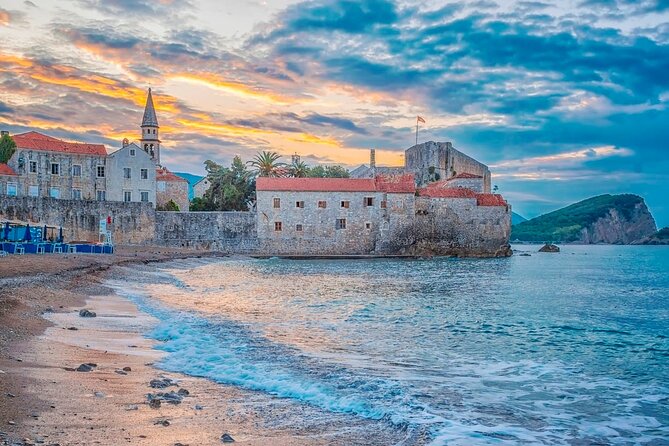
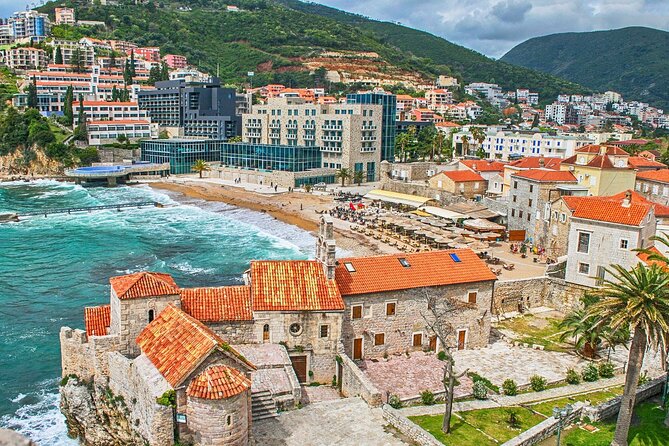
Day 4 takes you to Budva, Montenegro, which is split between old and new areas. The old town is where you focus, with medieval sights like St. Ivan church and the small church of St. Mary. I like this stop because it is not just beach time. You get historical center context without pretending Budva is a sleepy village.
Then you stop near Sveti Stefan for photos. Important detail: it is an exclusive residential resort now, and you cannot visit the island itself. That means you are there for viewpoints, sea lines, and pictures, not for tours inside buildings.
Next is Albania and Shkoder. You get a sense of the city’s deep time, and you visit Rozafa castle for sweeping views over the lake and river system. The tour also points out the Venetian influence in the architecture, which matters because it helps explain the look of the streets and buildings.
To round out the day, you go to a Venice Art Mask Factory. This is a short stop, but it is hands-on in a different way from monuments. You see papier-mâché masks made by hand and decorated entirely by hand, inspired by Venetian carnival styles and also modern creations. It is the kind of stop that works if you like crafts and want a souvenir with a story.
Day 5 adds Albania’s rural food side with Mrizi i Zanave (Restorant Agroturizëm), a slow food farm tour. This is where the itinerary softens. You learn how the farm supports jobs across the region, how it preserves regional organic products, and how older communist-era buildings were reused for storage. You then get free time to enjoy a traditional lunch or buy produce. Lunch is not automatically included, but the free time is real and useful.
In the afternoon you go to Prizren, often described as Kosovo’s cultural capital. The river runs through the old town under multiple bridges, and the tour emphasizes religious tolerance and architecture shaped by Byzantine and Ottoman history. You also get a practical tip in the tour flow: wandering works best here because the medieval houses and street patterns reward slow walking.
Two key Prizren stops follow:
- Sinan Pasha Mosque, with arabesque color and pattern
- Kalaja Fortress, for the hilltop panorama
If you like views, this is one of the best payoff stops. If you dislike steep climbs, you should wear good shoes and go at your pace.
A different way to spend a day in Dubrovnik:
- Blue Cave Small-Group Boat Tour from Dubrovnik
★ 5.0 · 9,360 reviews - Full-Day Dubrovnik Elaphite Islands Cruise with Lunch and Drinks
★ 5.0 · 8,823 reviews - Dubrovnik: Epic Game of Thrones Tour + Lokrum & Saver Option
★ 4.9 · 5,995 reviews - Dubrovnik: Elaphiti Islands Full-Day Cruise with Lunch
★ 5.0 · 5,938 reviews
Days 5 to 6: Kosovo bazaars, Decan frescoes, and Rahovec wine country
Day 6 continues the Kosovo rhythm. First is Gjakova, known for the oldest and largest bazaar of Kosovo. The bazaar was rebuilt after destruction in wars, so you are seeing restoration as much as heritage. This is a good place for browsing crafts, eating locally later on your own, and watching artisan workshops in action.
Next is the Monastery of Decan. The tour highlights its white look and the fact that Orthodox monks still inhabit it and make fresh organic food like cheeses. It is also UNESCO listed (because of its frescoes), and the frescoes portray people’s lives in the 14th century plus the Palaeologan renaissance that changed Byzantine painting.
Before returning to Prizren, you drive to Rahovec Valley, known as the capital of viticulture. The tour gives a time-depth angle: grape cultivation here traces back to Illyrian times. You also learn that vineyards sit at altitude, from 350 to 520 meters, which helps explain why the wine can taste different from lower regions. The itinerary notes an annual wine festival in September.
You end up overnighting in Prizren, which is a big advantage. It breaks the “just passing through” feeling and makes the next day easier.
Day 7: Kruja’s medieval bazaar and castle paths used to escape
Day 7 is Kruja, tied to Albanian resistance against the Ottomans in the 15th century. The day starts in the medieval old bazaar, with narrow streets and wooden houses. This is one of those spots where your senses do most of the work. You do not need a lecture to feel the age of the place.
Then comes Kruja Castle. The tour describes it as strategically placed on a rocky hill so attackers would struggle. You also get the story of hidden paths used by locals to slip away when enemies surrounded the castle. That detail makes the fort feel more human and less like a museum set.
After the guided part, you get time for a traditional lunch, souvenir shopping, or just more wandering.
This day is also a good reminder of what this tour does well: it mixes monuments with the everyday parts of history, like markets and side streets, then tops it off with a fortress story.
Day 8: Tirana food tour loop, Byrek at Tregu Çam, and grape raki with dinner included
Day 8 is Tirana, and this is the day I’d call the most “you can actually enjoy food without racing.” You meet a local companion, and the focus is culinary. The tour even nudges you to come hungry, which is good advice.
You start at Tregu Çam, where you try Byrek. You can expect thin layers of dough with fillings like cheese, meat, or spinach. Then you move through Çam bazaar, where you can buy goods from clothes to kitchen equipment and bargain with sellers.
The tour continues with neighborhoods like Pazari i Ri, a market known for second-hand goods. It is the opposite of souvenir-shopping. It is more like browsing everyday life, and you can find pre-loved items if that is your thing.
Then you get the New Bazaar experience and a traditional Albanian meal prepared with regional specialties, plus tasting Albanian grape raki. If you like food tours that feel local instead of staged, this is the one to circle on your calendar.
Days 9 to 10: Ohrid UNESCO views, paper making, then St Naum and Driloni
Day 9 crosses into North Macedonia with Struga as a first stop. You have a quick drink by the source of the Drini River, then you drive to Ohrid. Ohrid is UNESCO and the tour explains the lake’s layered identity, including the Roman naming and ancient Illyrian presence.
You visit the viewpoint of the Church of St. John at Kaneo, and the tour frames Ohrid as a center for Orthodox believers during the Byzantine period. It also repeats the popular claim about 365 Orthodox churches. Even if you treat the number as a story device, it still helps you grasp why the city feels religious and architectural, not just scenic.
The tour also points out Ottoman-era house architecture. Narrow streets, tunnels, and tiny yards shaped the hill terrain, with homes built so each could still get a lake view. That is the kind of detail that makes a city feel designed, not random.
A smart add-on comes next: a stop at the National Workshop for Handmade Paper Ljupcho Panevski. It is a small paper museum and workshop. The tour notes techniques dating back to the time of Gutenberg, and you can buy a piece of handmade paper as a souvenir.
Day 10 moves to St Naum, at the source of the River Crni Drim. The monastery complex is part of National Park Galicica, and it sits in a protected area. Then you cross back to Albania with a brief stop in Tushemisht, where you can meet local street vendors selling homemade preserves, honey, herbs, and handmade souvenirs.
To finish the day’s nature angle, you visit Driloni National Park. The tour focuses on the springs feeding a small lake, and the weeping willow trees by the shoreline. This is a slower, calmer break before you shift back into towns and castles.
Days 11 to 12: Berat’s 1001 windows and Gjirokaster’s stone city streets
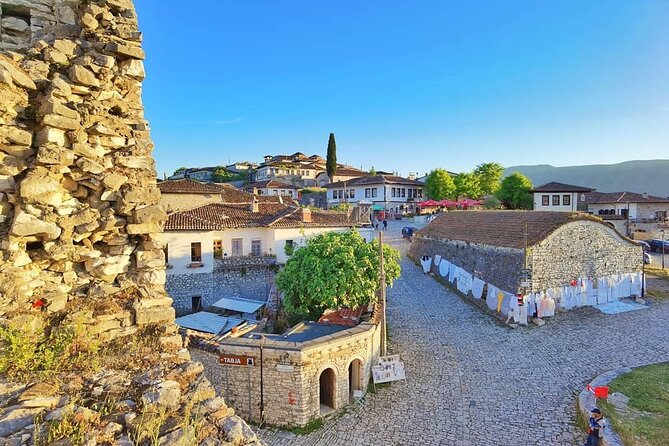
Day 11 is Berat, known as the town of 1001 windows and also UNESCO world heritage. You walk narrowed stone streets and look up at medieval houses stacked on steep hillsides. You also learn the city’s long timeline, from Illyrian settlement roots to the castle city named Antipatrea. The tour also notes that residents still live inside the castle walls today.
You then visit Berat Castle, plus churches and mosques and a lively lower town with old houses, an old stone bridge, museums, and communist-era remains. It is a full cross-section of time periods.
The stop at the National Iconographic Museum Onufri is a detail many tours skip. You learn about Onufri, a painter linked to churches across the Balkans, known for a specific reddish tone.
Next is Gorica Bridge and the Gorica neighborhood, a quick stop that helps you shift from the castle viewpoint to the feel of everyday streets.
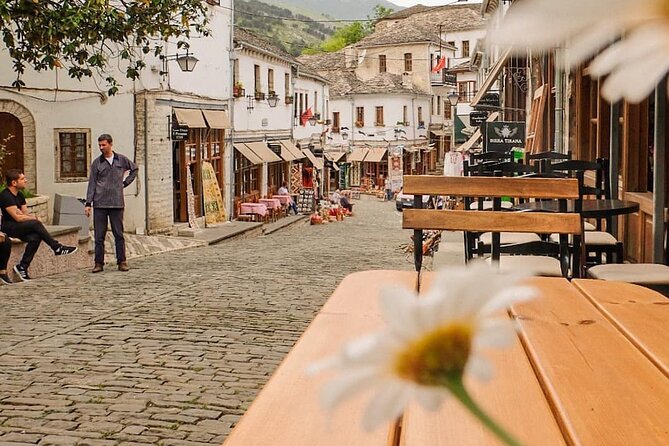
Day 12 is Gjirokaster, also UNESCO and called the stone city. Every house is described like a small fortress, and the town’s origins trace to the castle area built in the 4th century A.D. The point is preservation. The tour frames it as one of the best-preserved medieval towns in the Balkans.
You get time in the old town, pass by a medieval bazaar, and visit a best-preserved house where everything is described as original and authentic. The tour also mentions Gjirokaster becomes the Albanian folklore and traditional music capital every five years. That may not line up with your dates, but it signals what the town values.
The last stop on Day 12 is the Barrels Winery, a family-run vineyard where you get free time to enjoy lunch in the countryside setting.
Days 13 to 14: Ioannina, Meteora monasteries on rocks, and your Athens drop-off
Day 13 moves into Greece with Ioannina first. The tour takes you through cobbled old town streets and then into the Ioannina Castle, dating back to Byzantine era, where narrow lanes and historic buildings create a labyrinth feeling inside the walls. The tour also points you toward Greek cuisine options, including cafes and local delicacies, so this is another “take your time” day.
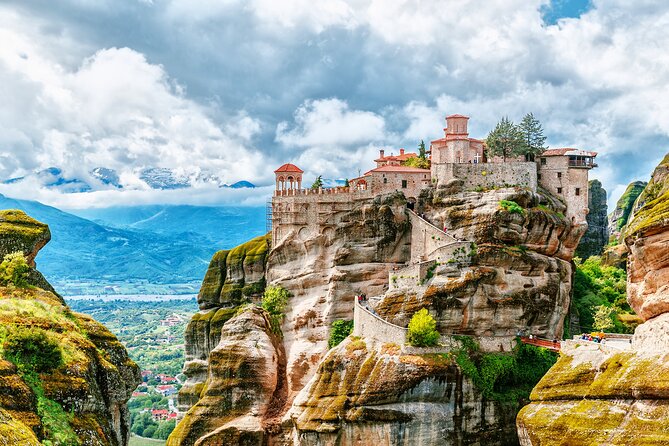
Then you drive to Meteora, UNESCO world heritage with monasteries built on spectacular rock formations dating to the 14th to 15th centuries. This stop comes with one of the strongest reasons to do this tour: timing for a sunset experience. The monasteries are on rocks, so light makes a huge difference. The tour schedules time and includes entry tickets for Meteora.
Day 14 is the wrap. Your tour leader drops you at your hotel in Athens.
There is also an alternative ending described in the tour information, where the leader drops you at Igoumentisa Port so you can take a ferry to Corfu port with tickets included. Since the end location varies by details, it is worth confirming which version you are assigned before you build your Greece plans.
Price and logistics: what $6,020.56 per person really buys
The price listed is $6,020.56 per person, and that is premium money. In tours like this, you are not paying just for hotels and ticket fees. You are paying for the mechanics that make a 14-day cross-country route doable: professional tour leader, private transportation, and entry tickets for the sites being visited, plus tourist taxes and international car insurance, road taxes, and petrol.
You do get several included “small but smart” items that add up:
- One Ottoman-style coffee or tea in Sarajevo
- The Tirana food tour portion, including the meal and grape raki
- Entry tickets for multiple key stops like Mostar’s bridge area, Sarajevo sites, Kotor church, the Ottoman house, select monastery and castle entries, and Meteora
Also, the tour runs on 3-star hotels with breakfast included. The information says pricing is based on double or shared-room occupancy in 3-star accommodations, so room type is part of the value equation.
Now the tradeoff: lunches, dinners, drinks, and snacks are not included. You should budget for meals and think about how you want to handle shopping in bazaars, especially in places like Prizren and Kruja where buying handmade items is part of the fun.
Finally, the pacing matters. The itinerary is full. On some days, the driving stretches can feel long if you want more stopping time along the way, and Meteora can feel like it needs more time if you want to go beyond the main sunset window.
Who this tour is best for, and when it may not fit
This tour fits you if you like:
- Structure with freedom, meaning guided history blocks but also afternoons and free time in places like Kotor and Prizren
- Culture that is not one-note. You see Ottoman houses, mosque architecture, fresco art, monastery sites, and UNESCO towns in one line
- A small-group vibe. The max of 10 travelers is the right size for real conversation and better navigation through crowded areas
You might want to look elsewhere if:
- You dislike long drives. This route is a lot of “move, stop, walk, move again.”
- You want deep time in fewer places. This itinerary gives you breadth and keeps you moving across multiple big regions and countries.
On the human side, the guides named in the tour information and feedback include people like Sokol, Neli, Juli, Eri, and Gerion, and the consistent theme is that the guide helps you connect the dots, not just list facts. That is what makes the Balkan story work across borders.
Should you book Dubrovnik to Athens with Choose Balkans?
I’d book it if you want a big Balkan sampler that still includes specific stops with real cultural weight, not just checkmarks. The value is strongest when you care about guided context, private logistics, and a small group size that keeps the days from turning into chaos.
I would pause before booking if you are sensitive to long driving days or you want a slower travel pace with fewer borders and fewer hotel changes. In that case, you may prefer a shorter route, or a trip that focuses on one country instead of stretching from Dubrovnik to Meteora.
Bottom line: if you want to trade a bit of comfort for a lot of variety, this is a strong bet.
FAQ
How long is the Dubrovnik to Athens tour?
It runs for approximately 14 days.
Where do I meet the tour in Dubrovnik?
The meeting point is Platska ul. 7, 20000, Dubrovnik, Croatia, with a start time of 7:30 am.
How does pickup work if I’m staying inside Dubrovnik Town?
A local representative or driver picks you up from the nearest point of your hotel within Dubrovnik Town. Cars may not enter some parts of Dubrovnik Town, so you may need to walk a bit to reach the pickup spot.
What is the group size?
The tour has a maximum of 10 travelers.
What is included in the price?
Included features include BB (accommodation and breakfast) for overnights in 3-star hotels, a professional tour leader, private transportation, hotel pickup and drop-off (Athens), entry tickets for the sites visited, tourist taxes, and insurance and driving costs. There are also specific inclusions like Ottoman-style coffee or tea in Sarajevo and a Tirana food tour.
Are lunches and dinners included?
No. Lunches, dinners, drinks, and snacks are not included.
Where does the tour end?
It ends either with a hotel drop-off in Athens, or with a drop-off at Igoumentisa Port for a ferry to Corfu port with tickets included. You should confirm which ending applies to your exact booking.
Newly reviewed in Dubrovnik
- Private Walking Tour through the Old Town of Dubrovnik★ 5.0 · 3 reviews
- Dubrovnik Old City Walls Private Tour★ 5.0 · 12 reviews
- Dubrovnik Private Photoshoot with Local Professional Photographer★ 5.0 · 15 reviews
- Dubrovnik Van Tour for Panoramic Views★ 5.0 · 25 reviews
- TOP OFFER: Dubrovnik to Split via Ston, Počitelj, Mostar, Kravica★ 5.0 · 15 reviews
- Ston Tour: City Walls, Saltworks, Wine & Adriatic Seafood★ 5.0 · 3 reviews
- Private Full Day Peljesac Wine Tasting Tour from Dubrovnik★ 5.0 · 35 reviews
- Pelješac Wine, Beach and Lunch – Relaxing Tour from Dubrovnik★ 5.0 · 15 reviews
Private, compared.
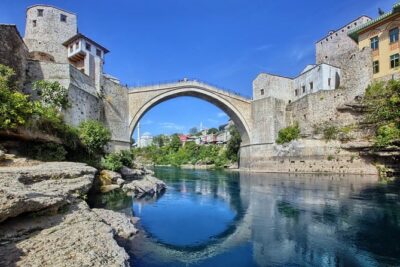
Mostar and Kravice Waterfalls Tour from Dubrovnik (Semi-Private)
Read our review →
Blue & Green Caves Private Boat Tour with Drinks
Read our review →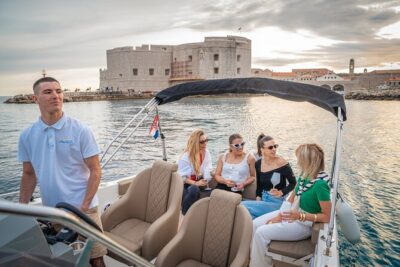
Dubrovnik Private Speedboat Tour to Elaphite Islands with Drinks
Read our review →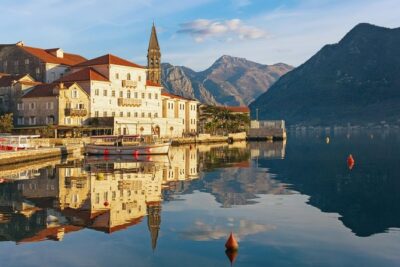
Private Tour: Montenegro Day Trip from Dubrovnik
Read our review →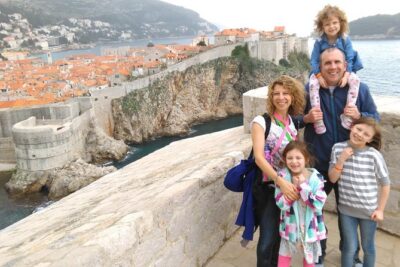
Tour The Game of Thrones – Private Walking Tour
Read our review →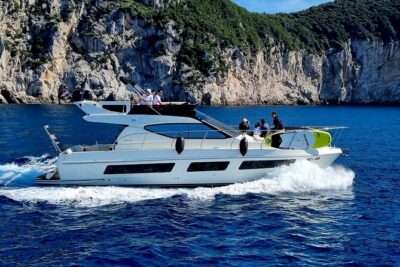
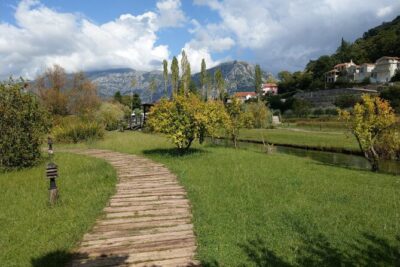
Montenegro Private Full Day Tour from Dubrovnik
Read our review →